
Remote Work Etiquette for Professional Communication
The New Standard of Professionalism in a Distributed World
Remote work has matured from an emergency response to a permanent operating model for organizations across North America, Europe, Asia, Africa and South America, reshaping expectations of how professionals communicate, collaborate and build trust without sharing the same physical space. For the hipster, freelancers that turn to CreateWork for best insights on remote work, business, technology and careers, remote work etiquette is no longer a soft skill or an optional add-on; it has become a core component of employability, leadership potential and long-term business resilience.
Hybrid and fully distributed teams in the United States, United Kingdom, Germany, Canada, Australia, Singapore, Japan and beyond now operate in an environment where asynchronous tools, AI-assisted workflows and cross-border hiring are normal, as evidenced by the continued expansion of platforms such as Microsoft, Google, Slack Technologies and Zoom Video Communications. In this context, professional communication is not only about clarity of language; it is about demonstrating reliability, respect, inclusivity and security in every interaction, whether through email, video, chat or collaborative documents. As organizations refine their remote work policies and professionals seek guidance from resources such as the CreateWork employment hub, clear etiquette standards have become essential to aligning expectations between employers, employees and freelancers worldwide.
Foundations of Remote Communication Etiquette
The foundation of remote work etiquette rests on three interlocking principles: clarity, consistency and consideration. Clarity means that messages are structured, complete and easy to act on, which matters even more when colleagues are spread across time zones from New York to London, Berlin, São Paulo, Singapore and Sydney, and cannot rely on spontaneous corridor conversations to resolve ambiguity. Consistency refers to predictable communication patterns-responding within agreed time frames, using the right channels for specific topics and maintaining a professional tone-that make remote collaboration feel stable and reduce cognitive load for already stretched teams. Consideration, finally, is the recognition that remote work blends professional and personal spaces, requiring heightened sensitivity to cultural differences, working hours, caregiving responsibilities and digital fatigue.
Organizations that codify these principles into explicit norms, often outlined in internal handbooks inspired by resources such as Harvard Business Review and the Chartered Institute of Personnel and Development, tend to see higher engagement and lower miscommunication. Professionals who treat etiquette as a strategic skill rather than a mere formality are better positioned to succeed in distributed roles, win new contracts as freelancers and advance into leadership positions. For readers exploring new career paths through CreateWork's freelancers resource, mastering these foundations is a practical differentiator in competitive global markets.
Email and Asynchronous Communication: Precision and Predictability
Email and asynchronous messaging remain the backbone of remote communication across regions such as Europe, Asia and North America, despite the growth of real-time chat tools and video platforms. Professional etiquette in this space begins with respecting the recipient's time by writing subject lines that are specific, action-oriented and searchable, such as "Q3 budget approval - response needed by 28 June" rather than vague titles that force colleagues to open every message. The body of the email should front-load the purpose, provide concise context and specify clear next steps, especially when communicating across departments or with external partners, and professionals can refine this skill by studying best practices from organizations such as The Economist and the American Management Association.
Time zone awareness is central to asynchronous etiquette in a global workforce that spans the United States, United Kingdom, India, China and Brazil. Professionals are increasingly expected to use tools such as World Time Buddy or calendar integrations within Google Workspace and Microsoft 365 to avoid scheduling conflicts and to indicate their own working hours in email signatures or collaboration profiles. As remote work becomes more entrenched, organizations that publish communication guidelines aligned with resources similar to those from Society for Human Resource Management help employees understand expectations for response times, out-of-office messages and escalation paths, reducing frustration and perceived unresponsiveness.
Video Meetings: Presence, Professionalism and Inclusion
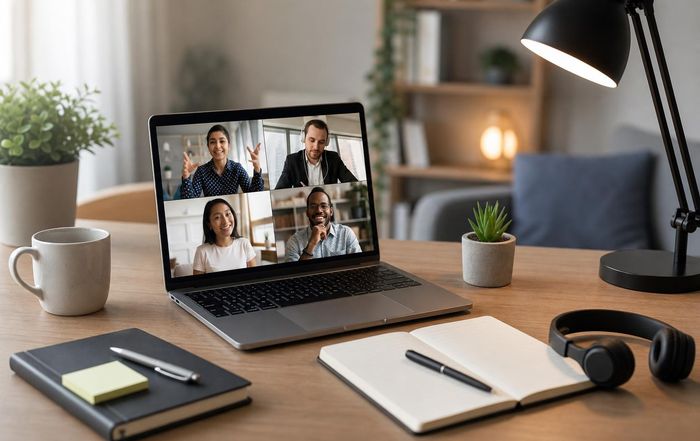
Video conferencing has evolved from a novelty to a default mode of collaboration for distributed teams, yet etiquette standards are still uneven across industries and regions. In 2026, professionals are expected to treat remote meetings with the same seriousness as in-person sessions, which means joining on time, testing audio and video in advance, and ensuring a stable internet connection using guidance from providers such as Cisco Webex or Zoom. Camera etiquette has become more nuanced; while not every meeting requires video, participants are generally encouraged to turn cameras on for high-stakes discussions, client interactions and one-to-one conversations, provided that organizations also recognize accessibility and privacy needs.
Backgrounds and appearance continue to matter, particularly for business audiences in financial centers such as New York, London, Frankfurt, Zurich, Singapore and Hong Kong, where professional norms remain relatively formal. Neutral, uncluttered backgrounds or company-approved virtual backdrops signal respect for colleagues and clients, and help minimize distractions. Equally important is meeting facilitation etiquette: hosts should circulate agendas in advance, manage speaking turns to avoid dominance by a few voices and make space for contributors from different cultures and time zones, drawing on inclusive practices promoted by institutions such as Catalyst and the World Economic Forum. For professionals building remote-first companies, integrating these standards into their operating playbooks, alongside resources like the CreateWork business hub, is key to cultivating a cohesive culture without physical offices.
Chat, Collaboration Platforms and the Line Between Informal and Unprofessional
Real-time chat platforms such as Slack, Microsoft Teams and Discord have blurred the line between formal and informal communication, especially in technology, creative and startup ecosystems across the United States, Canada, Germany, Sweden and South Korea. Remote work etiquette in this environment requires professionals to balance approachability with professionalism, recognizing that written messages are easily searchable, forwardable and archivable. Short, conversational messages can enhance responsiveness, but sarcasm, ambiguous humor or emotionally charged language can be misinterpreted, particularly across cultures and languages, as documented by cross-cultural communication research from organizations such as BBC Worklife.
Clear channel structures and naming conventions help prevent information overload, while thoughtful use of mentions and notifications respects colleagues' focus time and non-working hours. Many organizations now implement "quiet hours" or "no-ping windows" inspired by productivity research from Cal Newport and institutions such as MIT Sloan School of Management, allowing deep work without constant digital interruptions. For readers seeking to optimize their digital workflows, the CreateWork productivity tools section offers additional guidance on how to integrate communication platforms with task management, automation and calendar systems in a way that supports etiquette and performance simultaneously.
Cross-Cultural and Cross-Time-Zone Sensitivity
Remote work has accelerated the globalization of talent, with professionals in Europe, Asia-Pacific, Africa and the Americas increasingly collaborating on the same projects, contracts and product launches. This diversity is a strategic advantage, but it also raises the stakes for communication etiquette. What appears direct and efficient in the United States might be perceived as abrupt in Japan or France; similarly, indirect phrasing that is polite in parts of Asia may be seen as evasive in Germany or the Netherlands. Organizations that invest in cross-cultural training, drawing on insights from sources such as Hofstede Insights and InterNations, equip their teams to navigate these differences constructively.
Time-zone etiquette is another essential dimension, especially for distributed teams spanning London, Johannesburg, São Paulo, Dubai, Singapore and Melbourne. Professionals are increasingly expected to check colleagues' local times before scheduling meetings, to rotate meeting slots so that the burden of early or late calls is shared fairly and to avoid assuming that all team members are available for real-time collaboration. Asynchronous updates, recorded briefings and well-maintained documentation, aligned with guidance from platforms such as GitLab and Atlassian, help bridge time-zone gaps and reduce the need for disruptive meetings. For remote workers and freelancers designing sustainable careers, the CreateWork lifestyle section explores how to balance global collaboration with personal wellbeing.
AI, Automation and the Future of Professional Communication
By 2026, AI-assisted tools have become deeply embedded in professional communication, from email drafting and language translation to meeting transcription and sentiment analysis. Solutions developed by organizations such as OpenAI, DeepL, Grammarly and Google enable professionals to write clearer messages, adapt tone for different audiences and collaborate across languages more effectively. However, etiquette in this new environment requires transparency and discernment: professionals should review AI-generated content carefully to ensure accuracy, respect confidentiality and maintain a human voice, rather than delegating responsibility entirely to algorithms.
Automation also extends to workflows such as routing customer inquiries, triaging internal requests and generating status reports, which can reduce friction in remote teams if implemented thoughtfully. Poorly designed automations, by contrast, can create confusion, depersonalize relationships and erode trust. Organizations that align their AI strategies with ethical frameworks promoted by bodies such as the OECD and the European Commission are better positioned to harness technology without undermining human connection. For leaders and professionals seeking structured guidance on this frontier, the CreateWork AI automation resource provides practical perspectives on integrating intelligent tools into communication while preserving accountability and empathy.
Freelancers and Independent Professionals: Etiquette as a Competitive Edge
Freelancers, consultants and independent creatives across the United States, United Kingdom, India, South Africa, Brazil and beyond operate in a particularly demanding communication environment, where every interaction with clients and collaborators serves as a signal of reliability, expertise and professionalism. Remote work etiquette for this group extends beyond internal norms to encompass onboarding calls, proposal writing, progress updates and invoicing, all of which shape client perceptions and repeat business. Clear scoping documents, agreed communication cadences and proactive status reports demonstrate ownership and reduce the risk of misalignment, aligning with best practices recommended by organizations such as Freelancers Union and Upwork Global Inc.
Because independent professionals often juggle multiple clients across time zones and industries, they must be especially disciplined about boundaries and expectations, including realistic response times and availability windows. Tools that centralize communication, contracts and payments can help maintain order and transparency, and many freelancers turn to platforms and educational resources similar to those offered on CreateWork's money section and CreateWork's finance hub to manage the business side of their work. In competitive markets, polished communication etiquette frequently becomes the deciding factor between equally skilled providers, making it a tangible asset in long-term career development.
Communication Etiquette for Startups and Growing Businesses
Startups and scale-ups that embrace remote-first or hybrid models from inception face unique communication challenges as they grow from a handful of founders to distributed teams across continents. In early stages, informal channels and ad-hoc decisions may be sufficient, but as headcount increases and investors demand predictable execution, the absence of explicit communication norms can lead to confusion, duplicated work and cultural drift. Founders who study guidance from ecosystems such as Y Combinator, Techstars and the Kauffman Foundation increasingly recognize the need to define communication etiquette alongside product roadmaps and go-to-market strategies.
Codifying expectations around tools, tone, documentation and decision-making processes helps align teams in the United States, Europe, Asia and beyond, while also supporting onboarding for new hires who may never visit a physical office. Clear etiquette standards also strengthen employer branding, as prospective employees in competitive markets evaluate not only compensation and technology stacks but also the quality of internal communication and leadership transparency. For entrepreneurs designing remote-ready companies, the CreateWork business startup resource and the broader CreateWork guide offer structured pathways to embed communication excellence from the outset.
Upskilling for a Remote-First Future
As remote work etiquette becomes a baseline expectation rather than a differentiator, professionals across sectors-from finance and technology to creative industries and public services-must continuously refine their communication capabilities. Upskilling in this area involves more than learning how to use new tools; it requires developing emotional intelligence, cross-cultural literacy, digital writing skills and an understanding of how AI systems shape information flows. Many professionals now turn to online learning platforms such as Coursera, edX, LinkedIn Learning and FutureLearn to deepen these capabilities, often supported by employer-sponsored development programs.
Governments and educational institutions in regions such as the European Union, Singapore, Canada and Australia increasingly recognize remote work competencies as part of broader digital skills frameworks, aligning with policy guidance from organizations such as the OECD and the World Bank. For individuals seeking to future-proof their careers, the CreateWork upskilling section and related technology insights highlight how communication etiquette intersects with automation, data literacy and emerging forms of collaboration. In a labor market characterized by rapid change and intense competition, those who invest in these skills are better equipped to navigate transitions, negotiate flexible arrangements and lead distributed teams.
Building Trust Through Consistent Remote Communication
Ultimately, remote work etiquette for professional communication in 2026 is about building and sustaining trust across distance, diversity and digital interfaces. Trust is established when colleagues, clients and partners can rely on messages to be timely, accurate, respectful and secure, regardless of whether they originate in New York, London, Berlin, Stockholm, Nairobi, Mumbai or Tokyo. This trust is reinforced when organizations articulate clear norms, model them at leadership levels and provide the tools and training necessary for employees and freelancers to succeed.
For the small but loyal, remote working digital nomads who relies on CreateWork-from remote employees and independent professionals to founders and corporate leaders-the path forward involves seeing communication etiquette not as a static rulebook but as a living capability that evolves with technology, culture and economic conditions. By integrating best practices from global institutions, leveraging responsible AI and automation, and aligning personal habits with organizational expectations, professionals can transform remote communication from a source of friction into a sustainable competitive advantage. In doing so, they contribute to a world of work that is more inclusive, flexible and resilient, while ensuring that their own careers, businesses and financial futures remain robust in an increasingly digital economy, as explored across the broader ecosystem of CreateWork.
