
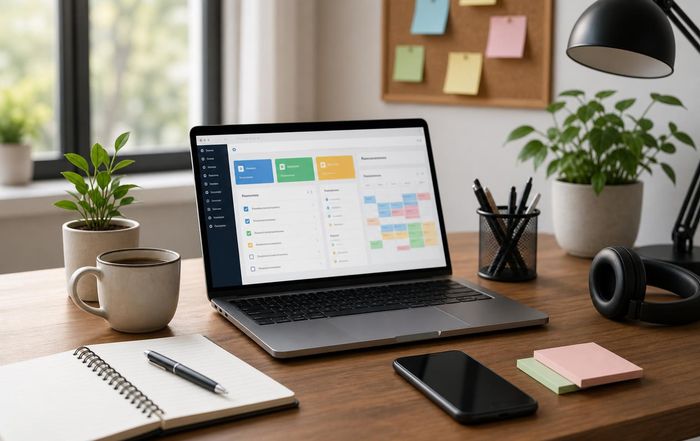
Remote Work Tools for Better Daily Organization
The Strategic Importance of Daily Organization in a Remote-First World
As remote and hybrid work models have shifted from emergency measures to long-term operating strategies across North America, Europe, Asia and beyond, the question facing leaders and independent professionals is no longer whether remote work can be productive, but how it can be organized in a way that is sustainable, measurable and aligned with business outcomes. Now the organizations and freelancers who consistently outperform peers are not simply those who adopted digital tools early, but those who have deliberately architected their daily workflows, decision-making and collaboration practices around a carefully selected stack of remote work tools, integrating them into coherent operating systems rather than isolated apps. For the community at CreateWork-from early-stage founders and remote-first enterprises to independent contractors and creative professionals-daily organization has become a competitive advantage that directly influences profitability, client satisfaction and long-term resilience, particularly as global labor markets continue to evolve and as automation reshapes the nature of knowledge work.
This evolution is occurring against a backdrop of rapid technological change and economic uncertainty. Research from organizations such as the World Economic Forum and OECD highlights that digital skills, self-management and the ability to work effectively in distributed teams are now core competencies across industries, from technology and finance to professional services and creative sectors. Remote work tools-when thoughtfully implemented and aligned with business processes-are enabling professionals in the United States, United Kingdom, Germany, Canada, Australia, Singapore and beyond to manage complex schedules, coordinate cross-border projects, maintain financial discipline and protect their focus in an environment saturated with information and constant connectivity. On CreateWork, these themes intersect directly with guidance on remote work, productivity tools and practical strategies for building sustainable, location-agnostic careers and companies.
From Ad-Hoc Apps to Integrated Remote Work Systems
In the early years of remote work adoption, many teams and freelancers relied on a patchwork of tools chosen for convenience rather than strategy, leading to duplicated effort, fragmented communication and a constant sense of digital overload. By 2026, leading organizations have moved toward integrated ecosystems that connect communication, task management, documentation, automation and analytics into a unified digital workplace. Platforms such as Microsoft 365 and Google Workspace have evolved into central hubs for collaboration, while specialized tools for project management, time tracking and knowledge management are increasingly integrated through APIs and automation platforms to reduce manual handoffs and context switching. For remote professionals and startups using CreateWork as a reference point for building their operational foundation, the key shift is from "What tools should I use?" to "How should my tools work together to support my daily decision-making and long-term goals?"
This systemic view is especially crucial for remote-first businesses and freelancers operating across multiple time zones and jurisdictions, where clients may be based in London, Berlin or New York while delivery teams are distributed across Asia-Pacific and Africa. Effective organization now requires not only a digital calendar and messaging platform, but a well-designed workflow that captures incoming work, prioritizes it against strategic objectives, allocates it to the right people and tracks its progress through to invoicing and reporting. On CreateWork's business hub at creatework.com/business.html, this holistic approach is reflected in guidance that links tools to business models, revenue streams and client expectations, emphasizing that technology is only valuable to the extent that it improves clarity, accountability and outcomes.
Core Categories of Remote Work Tools for Daily Organization
While every professional and organization will ultimately design a unique stack that reflects their industry, scale and regulatory environment, a few core categories of tools form the backbone of effective daily organization in remote settings. Calendar and scheduling platforms, often integrated with video conferencing solutions like Zoom or Google Meet, are essential for managing distributed meetings and protecting focus time. Task and project management systems such as Asana, Trello or Jira help translate strategic objectives into actionable work items, monitor dependencies and keep teams aligned on deadlines and deliverables, particularly when in-person check-ins are rare or impossible.
Knowledge management and documentation tools, including Notion, Confluence and Evernote, play a crucial role in capturing institutional knowledge, standard operating procedures and project histories, ensuring that information remains accessible to both current and future team members, regardless of location or time zone. Time tracking and billing platforms support freelancers and agencies in maintaining financial discipline, aligning directly with the guidance provided on CreateWork's money and finance resources and finance hub, where accurate measurement of billable hours, expenses and profitability is treated as fundamental to sustainable remote careers. The most effective remote professionals do not simply use these tools passively; they design daily routines around them, with structured planning, review and reflection processes that reinforce discipline and reduce cognitive load.
AI and Automation as Force Multipliers for Remote Organization
The emergence of advanced AI and automation capabilities between 2023 and 2026 has transformed the way remote workers manage their daily responsibilities, shifting tools from passive repositories of information to active assistants that can prioritize tasks, summarize communications and even draft responses or documents based on context. Platforms such as OpenAI and Anthropic have made it possible for both enterprises and individuals to embed intelligent agents into their workflows, from email triage and meeting summarization to automated tagging and routing of support tickets or client requests. For the CreateWork audience, this evolution is closely aligned with the themes explored on AI automation and technology, where AI is positioned not as a replacement for human expertise, but as a force multiplier that can free professionals to focus on higher-value work.
However, effective use of AI in daily organization requires a strong underlying structure of processes and governance. Tools that automatically generate task lists from meeting transcripts or suggest priorities based on deadlines and historical behavior are only as reliable as the data they receive and the rules that govern their use. Leading organizations in regions such as the European Union, the United States and Singapore are therefore investing in AI literacy, change management and ethical frameworks, drawing on guidance from entities like the European Commission and Singapore's Infocomm Media Development Authority to ensure compliance with emerging regulations and best practices. Within this context, CreateWork emphasizes that professionals and businesses should treat AI tools as part of a broader system of upskilling and capability building, rather than as quick fixes for underlying organizational challenges.
Time, Focus and Attention Management in Distributed Work
One of the most persistent challenges in remote work, particularly for freelancers and creative professionals, is the fragmentation of attention caused by constant notifications, overlapping communication channels and the psychological blur between professional and personal spaces. Tools designed to support focus and attention management, including digital minimalism applications, website blockers and structured timeboxing systems, have therefore become critical components of daily organization. Techniques such as the Pomodoro method, combined with calendar blocking and explicit communication norms around response times, are increasingly supported by features embedded in platforms like RescueTime or Forest, helping professionals in markets from the United Kingdom and Germany to Japan and Brazil protect deep work intervals and maintain cognitive stamina over long remote workdays.
For the CreateWork community, attention management intersects directly with lifestyle design and long-term career sustainability. On CreateWork's lifestyle resources and remote work guides, readers are encouraged to treat focus as a strategic asset, designing their tool stacks and routines to minimize unnecessary context switching and to create clear boundaries between work and non-work time. This is particularly important for globally distributed teams operating across Europe, Asia and North America, where asynchronous collaboration is essential and where an overreliance on synchronous messaging can quickly erode productivity and well-being. By combining communication tools with deliberate norms and personal practices, professionals can harness the flexibility of remote work without succumbing to burnout or constant distraction.
Financial and Operational Discipline for Remote Professionals and Startups
Beyond managing tasks and communication, daily organization for remote workers and digital-first businesses must also extend to financial and operational disciplines, especially in an economic climate characterized by inflationary pressures, currency volatility and shifting client expectations. Accounting and budgeting platforms, including QuickBooks, Xero and FreshBooks, allow freelancers, agencies and startups to track income, recurring expenses and tax obligations across multiple jurisdictions, while integrated invoicing and payment solutions streamline cash flow management. For entrepreneurs and independent professionals using CreateWork's resources on business startup and finance, such as business-startup and finance, these tools are positioned as essential infrastructure rather than optional add-ons, forming the foundation for sustainable scaling and risk management.
Operationally, remote businesses are increasingly using dashboards and analytics platforms to monitor key performance indicators, from billable utilization and project profitability to employee engagement and client retention. Guidance from institutions like the Harvard Business Review and McKinsey & Company underscores the importance of aligning metrics with strategic objectives, ensuring that daily activity is not only efficient but also effective in advancing long-term goals. Within the CreateWork ecosystem, this perspective is reflected in content that links economy trends and employment dynamics to practical decisions about pricing, investment in tools and allocation of time, enabling readers in regions from the United States and Canada to South Africa and New Zealand to make informed choices about how they structure their remote work lives.
Collaboration, Culture and Trust in Remote Environments
While tools can significantly enhance individual productivity and organizational clarity, they cannot by themselves create the trust, psychological safety and shared culture required for high-performing remote teams. Leaders in remote-first companies across Europe, Asia-Pacific and the Americas are increasingly recognizing that the way tools are used-particularly communication platforms and knowledge repositories-sends powerful signals about expectations, autonomy and accountability. Video conferencing, team chat and collaborative whiteboarding solutions such as Miro are now being combined with deliberate rituals, including structured check-ins, asynchronous status updates and regular retrospectives, to maintain human connection and alignment despite physical distance.
For the CreateWork audience, which spans freelancers collaborating with multiple clients, small distributed agencies and larger enterprises, the intersection of tools and culture is central to long-term success. Remote work guides on creatework.com emphasize that clear documentation, transparent decision-making and consistent communication norms are essential for building trust, particularly when team members may never meet in person or may work across vastly different cultural contexts in regions such as Europe, Asia and South America. Tools can facilitate this transparency by making information accessible and traceable, but leaders must still model behaviors that value clarity over speed, inclusion over convenience and long-term relationships over short-term efficiency.
Continuous Learning and Adaptation in a Changing Remote Work Landscape
The remote work tools that define daily organization in 2026 are not static; they are evolving rapidly as new technologies emerge and as regulatory, economic and competitive landscapes shift. Professionals and organizations that treat their tool stack as a fixed decision risk falling behind, particularly in industries where automation, AI and global competition are accelerating the pace of change. Instead, the most resilient remote workers and businesses adopt a mindset of continuous learning and experimentation, regularly reviewing their workflows, testing new tools and retiring those that no longer provide sufficient value. This approach aligns closely with the ethos of CreateWork, where freelancers, creative professionals and business leaders are encouraged to view their daily practices as evolving systems that can be refined over time.
Resources from organizations such as the International Labour Organization and World Bank highlight the broader structural shifts affecting remote work, from digital infrastructure investments to labor regulation changes in countries like France, Italy, Spain and South Korea. By staying informed about these developments and by investing in ongoing skills development, including digital literacy and self-management, remote professionals can ensure that their use of tools remains aligned with both market expectations and regulatory requirements. On CreateWork, this commitment to adaptation is supported through interconnected content on technology, upskilling and creative work, helping readers navigate not only the current landscape but also the emerging trends that will shape remote work in the years ahead.
Conclusion: Building a Deliberate, Trustworthy Remote Work Operating System
In 2026, remote work is no longer a temporary arrangement or niche practice; it is a foundational component of modern employment and entrepreneurship across the United States, Europe, Asia, Africa and South America. The professionals and organizations that thrive in this environment are those that treat daily organization as a strategic discipline, leveraging remote work tools not as isolated solutions but as elements of an integrated operating system that supports clarity, accountability and sustainable performance. From AI-enhanced task management and structured focus practices to robust financial tracking and transparent collaboration, each element of this system contributes to a broader framework of Experience, Expertise, Authoritativeness and Trustworthiness that clients, partners and employees increasingly expect.
For the global audience that turns to CreateWork for guidance on remote work, business building, finance, lifestyle and technology, the message is clear: the right tools, used deliberately and continually refined, can transform the way work is organized and experienced, enabling individuals and teams from New York to London, Berlin to Singapore, Sydney to Johannesburg to build careers and companies that are both flexible and resilient. By aligning tool choices with strategic objectives, investing in skills and culture, and remaining attentive to global economic and technological shifts, remote professionals can create daily structures that support not only productivity, but also long-term well-being and sustainable success.
