
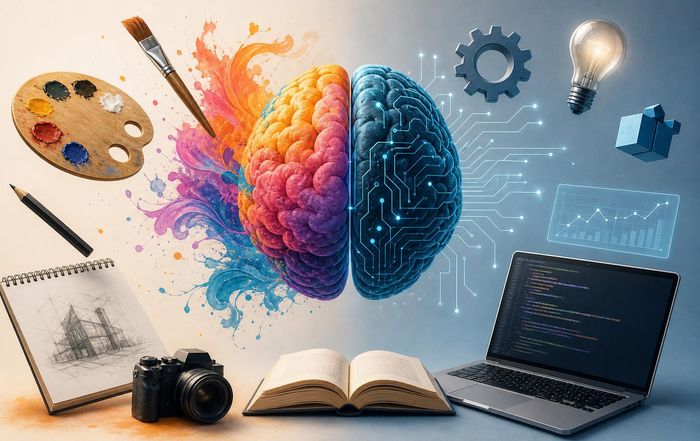
Upskilling Ideas for Creative and Technical Careers
The New Reality of Creative and Technical Work
The boundaries between creative and technical careers have become increasingly porous, with designers writing code, engineers learning storytelling, and marketers mastering data science, all within a labor market that is simultaneously global, remote, automated, and intensely competitive. For professionals who rely on their skills to secure flexible contracts, remote roles, or portfolio careers, the question is no longer whether to upskill but how to do so strategically, sustainably, and in ways that align with long-term career resilience. On CreateWork, where freelancers, founders, and remote professionals converge, this question is at the center of every conversation about work, income, and opportunity, and it shapes how individuals plan their next move in a world where skills depreciate faster than ever.
International organizations such as the World Economic Forum have consistently highlighted that the half-life of skills is shrinking and that continuous learning is becoming a core component of employability rather than a differentiator. Learn more about future skills and jobs at the World Economic Forum. At the same time, leading labor market research from the OECD underscores that creative problem-solving, digital literacy, and socio-emotional competencies are increasingly valued alongside technical expertise, especially in advanced economies across Europe, North America, and Asia. Readers looking to understand these macro trends in more detail can explore the OECD's work on skills and work. Against this backdrop, upskilling for creative and technical careers is not simply about adding more tools to a résumé; it is about deliberately shaping a professional identity that can thrive in remote, hybrid, and project-based work arrangements across regions as diverse as the United States, Germany, Singapore, and South Africa.
Why Upskilling Matters More in 2026
The acceleration of automation and AI, combined with the normalization of remote work across sectors, has dramatically changed how organizations in the United States, United Kingdom, Canada, Australia, and beyond structure their teams and allocate budgets. Many enterprises now rely on distributed networks of specialists rather than large in-house departments, which has expanded opportunities for freelancers while raising the bar on expectations. On CreateWork, professionals examining the future of employment can see that companies are increasingly selective, favoring individuals who demonstrate both deep expertise and an ability to adapt quickly to new tools, workflows, and market demands.
Studies from the International Labour Organization indicate that digitalization has created both new roles and new inequalities, with those who lack access to lifelong learning infrastructures at risk of stagnation. More information is available through the ILO's analysis of digitalization and the future of work. At the same time, the World Bank has emphasized that human capital-skills, health, and knowledge-is now a primary driver of economic growth, especially in emerging markets across Asia, Africa, and South America, where young, digitally savvy workforces are competing globally. Their insights on human capital and skills reveal that individuals who invest in both creative and technical capabilities are better positioned to move across sectors, geographies, and income brackets.
For independent professionals and remote workers, the implication is clear: upskilling is directly tied to pricing power, negotiation leverage, and long-term financial security. Readers who follow CreateWork's coverage of money and income strategies understand that higher-value skills often translate into better rates, more resilient client relationships, and a stronger buffer against economic cycles in Europe, Asia, and the Americas.
Core Skill Domains for Creative and Technical Professionals
Across creative and technical fields, four broad domains of skills have emerged as particularly important in 2026: advanced digital literacy, data and analytical fluency, AI and automation literacy, and human-centered capabilities such as communication and collaboration. On CreateWork, these domains intersect with the site's focus on technology, business, and upskilling, forming a practical roadmap for professionals who want to future-proof their careers.
Advanced digital literacy now extends far beyond basic software proficiency. For designers, this might mean mastering generative design tools, 3D environments, or motion graphics platforms used in global media markets; for developers, it includes containerization, cloud-native architectures, and modern frameworks. Resources such as the Mozilla Developer Network provide a strong foundation for web and application developers seeking to deepen their expertise, and professionals can explore its extensive documentation at MDN Web Docs.
Data and analytical fluency are increasingly non-negotiable, even in roles historically considered purely creative. Marketing strategists, content creators, and product designers are expected to interpret analytics dashboards, run basic experiments, and understand how their work affects key performance indicators. The Khan Academy platform offers accessible introductions to statistics and data analysis for those seeking to build a quantitative foundation, and its courses on statistics and probability can be particularly useful for creative professionals who are less comfortable with numbers.
AI and automation literacy are central to the editorial and educational focus of CreateWork, especially through its dedicated coverage of AI and automation trends. Professionals in both creative and technical careers are expected to understand not only how to use AI tools but also how to evaluate their limitations, manage risks, and integrate them into workflows in ways that respect privacy, intellectual property, and ethical standards. Organizations such as MIT and its initiative on the digital economy have produced influential research on how AI is reshaping work; readers can explore more at MIT's resources on work and AI.
Finally, human-centered capabilities such as communication, collaboration, and cross-cultural competence are increasingly important in remote and hybrid environments. The Harvard Business Review has documented how distributed teams require more deliberate communication and clearer processes to function effectively, especially across time zones and cultures, and professionals can explore these insights in its coverage of remote and hybrid work. For freelancers and remote workers engaging with clients from New York to Tokyo, these skills often determine whether technical or creative expertise can be translated into lasting business relationships.
Upskilling Strategies for Creative Professionals
For creative professionals-designers, writers, filmmakers, illustrators, musicians, and multidisciplinary artists-upskilling in 2026 involves both deepening core craft and expanding into adjacent technical and business capabilities. On CreateWork, the intersection of creativity and commerce is a recurring theme in the platform's coverage of creative careers and opportunities, where individuals are encouraged to view their skills not only as artistic expressions but also as assets within a global digital economy.
One key strategy is to build fluency in digital production pipelines that are now standard in agencies and studios across Europe, North America, and Asia. This may involve learning advanced features of tools such as motion design suites, 3D modeling software, or non-linear editing platforms, often through structured learning paths offered by platforms like LinkedIn Learning, which curates courses for creative professionals seeking to expand their technical range, as seen in its catalog of creative skills courses. At the same time, creatives are increasingly expected to understand user experience principles, accessibility standards, and inclusive design frameworks, particularly in markets such as the United Kingdom, the Netherlands, and the Nordic countries where regulation and user expectations are stringent. The Interaction Design Foundation offers in-depth resources on user experience, which can be explored via its materials on UX design.
Another important dimension is the integration of AI tools into creative workflows without compromising originality or ethical integrity. Generative models for text, image, audio, and video are now widely available, and professionals who understand how to use them as accelerators rather than replacements can gain a significant productivity advantage. However, this requires awareness of issues such as bias, copyright, and data protection. Institutions like Stanford University have published guidance and research on responsible AI; interested readers can learn more through Stanford's Human-Centered AI initiative. For creatives on CreateWork, this knowledge is not abstract; it directly informs how they position their services to clients who want efficiency but also demand authenticity and compliance with emerging regulations in regions such as the European Union.
Finally, creative professionals benefit from strengthening their business and financial acumen, especially if they operate as independent contractors or small studios. Understanding pricing models, contract structures, intellectual property rights, and tax implications across jurisdictions can significantly improve income stability. The editorial team at CreateWork regularly explores these themes in its coverage of freelancers and independent work and in its deeper dives into finance and money management, encouraging readers to treat financial literacy as a core creative skill that underpins sustainable practice.
Upskilling Strategies for Technical Professionals
Technical professionals-software engineers, data scientists, cybersecurity specialists, DevOps engineers, and cloud architects-face a different but equally demanding set of upskilling pressures. The rapid evolution of programming languages, frameworks, and infrastructure technologies means that what was cutting-edge three years ago may now be considered legacy, particularly in innovation hubs across the United States, India, China, and Germany. On CreateWork, the coverage of technology trends and tools emphasizes that technical professionals should adopt a portfolio approach to skills, combining deep expertise in one or two areas with a broad understanding of adjacent domains.
One central upskilling avenue is cloud-native development, which has become the default for many organizations in sectors ranging from finance to entertainment. Major providers such as Amazon Web Services, Microsoft Azure, and Google Cloud offer extensive certification pathways that validate expertise in architecture, security, and operations. Professionals seeking to strengthen their credentials can explore AWS's training and certification resources as a starting point. As organizations in Europe, Asia, and the Americas move toward multi-cloud and hybrid architectures, engineers who can design resilient, cost-efficient systems across platforms are in high demand.
Another critical area is data and AI engineering. The growth of machine learning applications in sectors such as healthcare, fintech, logistics, and media has created a need for professionals who can build robust data pipelines, manage feature stores, and ensure model governance. Educational platforms like Coursera, which partners with leading universities and companies, offer structured specializations in data science and machine learning, accessible via its catalog of data science courses. For technical professionals, combining these capabilities with domain knowledge-whether in finance, healthcare, or manufacturing-can significantly enhance employability and earning potential, especially in markets like Singapore, Japan, and Switzerland where specialized expertise is highly valued.
Cybersecurity remains another priority, as organizations confront increasingly sophisticated threats across all regions, from North America to Africa. The Cybersecurity and Infrastructure Security Agency (CISA) in the United States provides guidance and frameworks that professionals worldwide can adapt, and its resources on cybersecurity best practices are widely referenced. For engineers, learning secure coding practices, threat modeling, and incident response procedures is no longer optional, particularly when working on critical infrastructure, fintech platforms, or health systems that operate across borders and regulatory regimes.
Remote Work, Lifestyle, and the Upskilling Mindset
The normalization of remote and hybrid work has reshaped how professionals in creative and technical careers think about lifestyle, location, and learning. On CreateWork, the dedicated focus on remote work and lifestyle design reflects a recognition that upskilling is most effective when integrated into daily routines that support well-being and focus, rather than treated as a sporadic, crisis-driven activity. Professionals in countries such as Canada, Australia, Spain, and Brazil increasingly design their weeks to accommodate deep work, client collaboration across time zones, and structured learning blocks.
This shift is supported by a proliferation of productivity tools and platforms that help individuals manage tasks, track progress, and maintain focus. The CreateWork coverage of productivity tools illustrates how independent professionals can build lightweight, personalized systems that integrate project management, knowledge capture, and learning goals. External resources such as Notion, Trello, or Asana provide robust frameworks for organizing both client work and upskilling projects, and their official sites, such as Notion, offer templates and guides that make it easier to get started.
In parallel, there is growing recognition that sustainable careers require attention to mental health, physical well-being, and social connection. Organizations like the World Health Organization have emphasized the importance of mental health in the workplace, including remote environments, and professionals can explore its guidance on mental health and work. For the global community that follows CreateWork, this means viewing upskilling not as an endless race but as a continuous, deliberate practice embedded within a balanced lifestyle that supports long-term performance rather than short-term burnout.
Turning Upskilling into a Top Career Assets
Ultimately, the most significant shift this year is not the availability of new tools or courses, but the growing expectation that professionals will take ownership of their learning journeys, aligning them with broader career and business strategies. On CreateWork, this perspective is reflected across its coverage of business startup and entrepreneurship, economic trends, and its overarching career and business guides, where skills are treated as assets that can be developed, monetized, and combined in unique ways.
For creative and technical professionals operating in a global, remote-first economy, the most effective upskilling strategies share several characteristics. They are intentional, focused on clearly defined career outcomes rather than vague notions of staying "up to date." They are integrated, combining technical depth with creative thinking, business understanding, and human skills. They are validated, through certifications, portfolios, or demonstrable projects that can be presented to clients and employers from New York to Berlin, from Singapore to Cape Town. And they are iterative, built around a mindset of continuous experimentation, reflection, and adjustment as technologies, markets, and personal priorities evolve.
As readers engage with the resources, analysis, and tools that CreateWork curates across its main platform at creatework.com, the opportunity is to transform upskilling from a reactive response to technological change into a proactive, strategic habit. In doing so, freelancers, remote employees, founders, and portfolio professionals across the United States, Europe, Asia, Africa, and South America can not only protect their livelihoods but also craft careers that are more creative, more flexible, and more resilient than those imagined in previous decades. CreateWork, you are the boss!
