
How to Create a Productive Home Office Routine?
The Strategic Importance of a Home Office Routine
By 2026, remote and hybrid work have shifted from experimental arrangements to core operating models for organizations across North America, Europe, Asia and beyond, and the home office has become a primary workplace for millions of professionals, entrepreneurs and freelancers. As companies from Microsoft to Shopify refine their distributed work policies and governments from the United States to Germany update labor regulations, the question is no longer whether people can work from home, but how they can do so consistently, sustainably and productively. For the global audience of CreateWork-spanning freelancers, business leaders, technologists and creative professionals-the home office routine is now a central pillar of career success and business performance.
Research from organizations such as Gallup and McKinsey & Company continues to show that well-structured remote work can increase productivity, reduce burnout and improve retention, but only when individuals and teams design deliberate routines that balance deep focus, collaboration, wellbeing and continuous learning. On CreateWork, where readers explore the evolving landscape of remote work, employment and the broader economy, the home office routine is treated not as a lifestyle perk but as a strategic asset that affects income, performance and long-term career resilience.
Designing the Physical Environment for High Performance
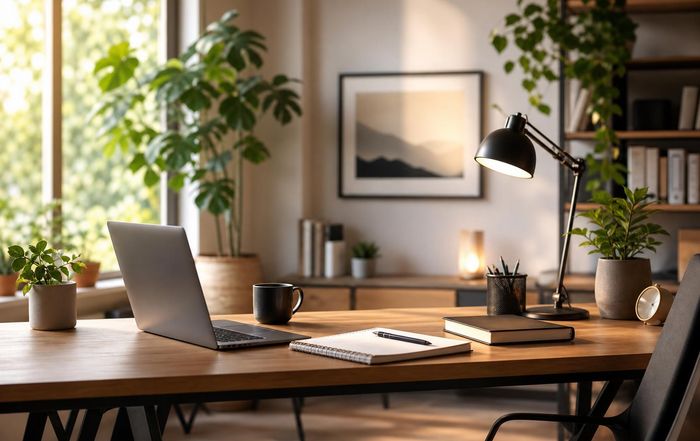
The foundation of any productive home office routine is the physical environment, which in 2026 is shaped not only by ergonomics and comfort but also by digital infrastructure, energy efficiency and health considerations. Professionals in cities from London and Berlin to Singapore and São Paulo are increasingly treating their home workspaces as investment assets that support sustained concentration and protect long-term health. Guidance from organizations such as OSHA and Mayo Clinic highlights the importance of ergonomic seating, neutral wrist positioning, eye-level screens and movement-friendly setups to reduce musculoskeletal strain and fatigue during long workdays.
For the CreateWork audience, the physical environment also intersects with financial and business planning. A thoughtfully designed workspace can justify equipment budgets, support tax planning in some jurisdictions and improve the perceived professionalism of client calls, which is especially critical for those building a client base through freelance work or launching a business startup. Reliable connectivity, redundant power options where necessary and secure networking have become basic infrastructure, and professionals increasingly look to sources like IEEE and Cisco to understand best practices for home networking, security and device management.
Structuring the Workday: Routines that Align with Human Performance
A productive home office routine in 2026 is less about rigid scheduling and more about aligning work patterns with how human attention, energy and creativity naturally fluctuate throughout the day. Research from organizations such as Harvard Business Review and APA underscores that cognitive performance peaks and troughs are highly individual yet follow recognizable patterns, and that routines which respect these patterns consistently outperform ad hoc work habits. For knowledge workers, this means aligning deep-focus tasks such as analysis, writing, design or coding with personal peak energy periods, and reserving lower-energy windows for administrative work, email or routine meetings.
On CreateWork, this approach is reflected in guidance that encourages professionals to build a rhythm that supports both productivity and wellbeing, integrating principles shared across productivity tools, lifestyle design and technology strategy. A typical high-performing routine might begin with a short planning session that defines one to three critical outcomes for the day, followed by a protected deep-work block with minimized digital distractions, scheduled collaboration windows that respect time zones in global teams, and a structured shutdown ritual that clearly marks the end of the workday. This structure is not merely about discipline; it is about reducing decision fatigue, enhancing predictability and supporting a sense of control in complex, fast-moving work environments.
Integrating Technology Intelligently into the Home Office
The home office of 2026 is a highly instrumented digital environment, with cloud platforms, AI assistants, automation tools and collaboration suites woven into daily routines. Yet the most productive professionals are not those who adopt every new tool, but those who integrate technology intentionally, aligning each application with a specific workflow or performance objective. Enterprise-grade platforms such as Microsoft 365, Google Workspace and Slack remain central for communication and collaboration, while specialized tools for project management, time tracking and creative production are selected to fit the needs of specific roles and industries.
For the CreateWork community, where many readers are building independent careers or leading distributed teams, the strategic use of technology is closely linked to themes explored in AI automation and productivity tools. AI-driven scheduling, summarization and drafting tools can dramatically reduce cognitive load when used thoughtfully, but they also require governance, data security awareness and clear ethical standards. Guidance from organizations such as NIST and OECD on AI risk management and digital policy is increasingly relevant even at the individual home office level, particularly for professionals handling sensitive data across borders in sectors such as finance, healthcare or legal services.
Financial and Career Implications of a Strong Home Office Routine
A well-designed home office routine is not purely an operational concern; it has direct implications for income, career development and business resilience. For freelancers in the United States, the United Kingdom, Canada, Australia and across Europe and Asia, the ability to deliver consistently high-quality work from home determines client retention, referral rates and the capacity to command premium rates in competitive global markets. Platforms such as Upwork and Fiverr showcase how top-performing professionals differentiate themselves not only by skill but by reliability, responsiveness and the ability to manage complex remote engagements smoothly.
On CreateWork, this connection between routine and financial outcomes is explored through resources focused on money, finance and business. A structured home office routine supports more accurate time tracking, better project estimation and disciplined invoicing, which together strengthen cash flow and financial planning. It also creates space for deliberate upskilling, allowing professionals to allocate regular time to learn new technologies, deepen domain expertise or pursue certifications from recognized providers such as Coursera and edX, which are increasingly important in a labor market where skills evolve faster than traditional job descriptions.
Balancing Focus, Communication and Boundaries
One of the most significant challenges in home-based work across regions from Asia-Pacific to Europe and North America is maintaining healthy boundaries between focused work, collaboration and personal life. Without the physical separation of a traditional office, professionals often find their days fragmented by constant digital communication, or conversely, feel isolated and disconnected from colleagues and clients. Research from Stanford University and global surveys by Deloitte have highlighted that unmanaged digital overload can erode productivity and wellbeing, while intentional norms around response times, meeting structures and communication channels can significantly improve outcomes.
For the CreateWork audience, this translates into routines that explicitly allocate time for synchronous collaboration, asynchronous updates and uninterrupted deep work. It also means setting expectations with managers, clients and family members about availability and response patterns, which is particularly important for professionals operating across time zones from New York and London to Singapore and Sydney. By embedding these boundaries into daily routines-rather than relying on ad hoc decisions-individuals protect their capacity for high-quality work while reducing the risk of burnout, a theme that intersects with broader discussions of lifestyle design and sustainable career building on CreateWork.
Health, Wellbeing and Sustainability in the Home Office
A productive routine is only sustainable if it supports physical and mental health over the long term, a lesson that has become increasingly clear as remote work has matured across regions from Scandinavia to South Africa and Brazil. Guidance from organizations such as the World Health Organization and NHS emphasizes the importance of regular movement, eye breaks, healthy nutrition and sleep hygiene, all of which can be integrated into a home office routine through micro-habits and environmental cues. Professionals who treat their home office as a holistic performance environment-rather than simply a place to sit with a laptop-are better positioned to maintain energy, creativity and resilience during demanding periods.
On CreateWork, where readers are often balancing entrepreneurial ambitions, global collaboration and personal responsibilities, wellbeing is framed as a strategic enabler of high performance rather than a secondary concern. Integrating short movement breaks, scheduled outdoor time where possible, and clear shutdown rituals into the daily routine helps reinforce the psychological boundary between work and personal life. This approach aligns with emerging thinking on sustainable high performance from institutions such as INSEAD and supports the long-term viability of remote and hybrid careers in sectors ranging from technology and finance to creative industries and professional services.
Continuous Improvement: Treating the Routine as a Living System
The most effective home office routines in 2026 are not static schedules but living systems that evolve with changes in role, workload, family circumstances, technology and the broader economy. Professionals and organizations that treat routines as experiments-regularly reviewing what works, what creates friction and what needs to change-tend to adapt more successfully to shifts such as new client demands, organizational restructurings or macroeconomic volatility. Frameworks from MIT Sloan Management Review and other leading research institutions emphasize the value of feedback loops and data-informed decision-making, even at the individual level.
For the CreateWork community, which includes entrepreneurs launching ventures, freelancers refining their service offerings and employees navigating complex corporate environments, this mindset of continuous improvement is reinforced through resources such as the CreateWork guide and insights on business startup strategy. Professionals can use simple metrics-such as the number of deep-work hours achieved per week, the proportion of planned tasks completed or subjective energy ratings throughout the day-to refine routines over time. By revisiting their approach regularly, they ensure that their home office setup, technology stack and daily structure remain aligned with evolving goals in income, learning and lifestyle.
The Role of Organizations and Policy in Supporting Home Office Routines
While individuals ultimately own their personal routines, organizations and policymakers play a significant role in enabling productive home office environments across regions from the European Union to Asia-Pacific and North America. Leading employers, including global firms such as Accenture and Salesforce, are investing in remote work stipends, ergonomic assessments, digital wellbeing initiatives and management training focused on outcome-based performance rather than presence-based metrics. Policy frameworks and labor regulations in countries such as France, Spain and Canada increasingly address issues such as the right to disconnect, reimbursement for home office expenses and health and safety standards for remote workers.
For readers of CreateWork who lead teams or build companies, aligning organizational practices with these emerging standards is both a compliance requirement and a competitive differentiator in attracting and retaining talent. Resources on business, technology and the economy help decision-makers understand how to craft policies that support flexible, high-performance work while maintaining accountability, security and cultural cohesion. As remote and hybrid models continue to evolve in 2026 and beyond, organizations that treat the home office routine as a strategic component of their operating model-rather than a private matter left entirely to employees-will be better positioned to compete in global talent markets.
Positioning the Home Office Routine at the Center of Modern Work
By 2026, the home office routine has become a central structure through which professionals across continents organize their time, focus, learning and income generation. For the global audience of CreateWork, spanning freelancers in Berlin, software engineers in Toronto, designers in Tokyo, consultants in London and entrepreneurs in Johannesburg, the home office is no longer a temporary solution but a core workplace that demands the same strategic attention as any corporate headquarters. The most successful routines integrate physical environment design, intelligent technology use, financial planning, health and wellbeing, and continuous improvement into a coherent system that supports both professional performance and personal sustainability.
As readers explore the broader ecosystem of work, money and lifestyle on CreateWork-from remote work strategies and freelancer opportunities to AI-enabled productivity and long-term career upskilling-the home office routine emerges as a practical, daily expression of their ambitions and values. In an era where geography is less determinant of opportunity and digital infrastructure connects professionals across time zones and cultures, those who design and refine their home office routines with intention, evidence and self-awareness will be best equipped to thrive in the evolving world of work.
