
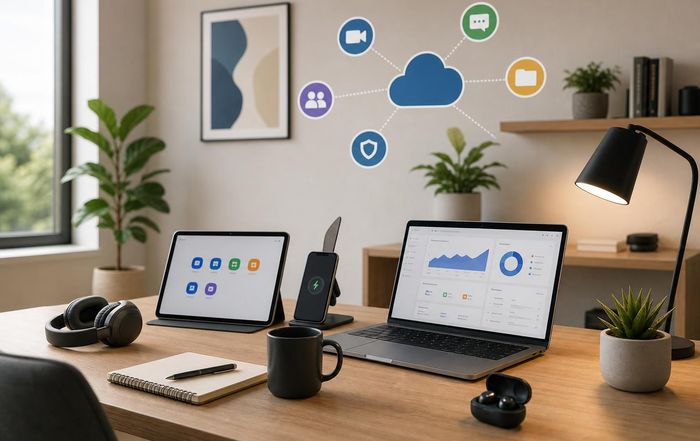
Technology Choices That Improve Remote Workflows
Remote work is no longer a contingency plan or a temporary response to disruption; so now it has become a structural pillar of how organizations across North America, Europe, Asia and beyond operate, hire, and compete. For the global community of freelancers, distributed teams, and digital-first companies that rely on CreateWork as a trusted resource, the question is no longer whether remote work is viable, but which technology choices genuinely improve workflows, reduce friction, and build a sustainable competitive advantage in an increasingly virtual economy.
The Strategic Context: Remote Work as Core Infrastructure
In the United States, United Kingdom, Germany, Canada, Australia and across major economies in Asia and Europe, remote and hybrid models have matured into sophisticated operating systems for business rather than ad hoc arrangements. Reports from organizations such as the World Economic Forum show how digital infrastructure, cloud platforms, and collaboration tools now underpin productivity and employment patterns worldwide, and leaders who treat remote work technology as strategic infrastructure rather than discretionary tooling are better positioned to attract talent, expand into new markets, and withstand macroeconomic shocks. Learn more about how digital transformation is reshaping global work patterns on the World Economic Forum website.
For the audience that turns to CreateWork for guidance on remote work, freelancing, and business strategy, this strategic shift means that every technology decision-from communication platforms to AI automation-directly affects revenue, client experience, employee retention, and the long-term resilience of both solo practices and larger organizations.
Communication and Collaboration: Building a Digital Headquarters
The most consequential technology choices in remote environments often revolve around communication and collaboration, because these tools effectively become the "digital headquarters" where decisions are made, culture is expressed, and value is created. Organizations that rely solely on ad hoc messaging apps without a cohesive strategy frequently encounter misalignment, decision fatigue, and burnout, while those that intentionally design communication ecosystems see higher engagement and clearer accountability.
Many global teams now combine persistent chat platforms, such as those offered by Microsoft or Slack Technologies, with structured project management environments to create a multilayered communication stack that distinguishes between urgent, synchronous conversations and asynchronous, documented work. Guidance from Harvard Business Review on asynchronous collaboration has helped managers understand how to reduce unnecessary meetings and create documentation habits that improve onboarding, knowledge transfer, and cross-time-zone collaboration. Leaders can explore these best practices further on the Harvard Business Review site.
For freelancers and small businesses who engage clients across the United States, Europe, and Asia, the choice of collaboration tools is also a brand decision, signaling professionalism and reliability. Integrating shared workspaces, version-controlled document repositories, and secure client portals can help independent professionals present themselves as mature partners rather than ad hoc vendors, reinforcing the principles of expertise and trustworthiness that CreateWork emphasizes in its guides and resources for remote professionals.
Cloud Platforms and File Management: The Backbone of Distributed Work
Behind every effective remote workflow lies a robust approach to storage, access, and version control. As teams in regions from Singapore and Japan to Brazil and South Africa generate ever larger volumes of content, data, and intellectual property, cloud platforms have become the backbone of distributed operations, enabling secure access from any location while supporting compliance and governance requirements.
Leading providers such as Google, Amazon Web Services, and Microsoft Azure have expanded their offerings to include integrated identity management, encryption at rest and in transit, and fine-grained access controls that help businesses meet regulatory expectations in the European Union, the United Kingdom, and other jurisdictions. Organizations seeking to deepen their understanding of cloud security standards can review resources from the National Institute of Standards and Technology, which outlines frameworks for secure cloud computing and identity management.
For remote-first companies and independent professionals, the quality of file management systems directly affects productivity and client confidence. Poorly structured folders, inconsistent naming conventions, and uncontrolled sharing links lead to confusion and rework, whereas a disciplined information architecture supported by the right technology stack enables teams to locate critical assets quickly, maintain single sources of truth, and scale operations. As businesses grow, integrating cloud storage with customer relationship management and financial systems, such as those described by Salesforce or Intuit, helps create unified data flows that support better decision-making and streamlined operations.
AI and Automation: Transforming Remote Productivity in 2026
By 2026, artificial intelligence and automation have moved from experimental pilots to mainstream components of remote workflows, particularly in knowledge-intensive industries across North America, Europe, and Asia-Pacific. The organizations that derive the greatest value from AI are those that approach it as a way to augment human expertise rather than replace it, embedding intelligent capabilities into everyday tools in ways that reduce cognitive load and free professionals to focus on high-value work.
Modern AI assistants now help remote teams summarize long meetings, generate first drafts of client communications, prioritize inboxes, and extract insights from large document sets, drawing on advances documented by research institutions such as MIT and Stanford University. Those interested in the broader implications of AI on work and productivity can explore research from MIT Technology Review. At the same time, workflow automation platforms connect disparate systems-project management, time tracking, invoicing, and customer support-so that routine tasks are triggered automatically based on defined events, reducing manual data entry and the risk of human error.
The CreateWork community has shown particular interest in how AI can support freelancers, small businesses, and remote teams in optimizing their operations. Resources on AI automation and productivity tools emphasize that effective adoption requires clear guardrails around data privacy, strong human oversight, and transparent communication with clients and employees about how AI is being used. Organizations that combine technical proficiency with ethical governance are better positioned to earn trust and maintain compliance as regulators in the European Union, the United States, and other regions refine AI-related policy.
Cybersecurity and Trust: Protecting Remote Work at Scale
As remote work extends corporate networks into homes, co-working spaces, and mobile environments across continents, cybersecurity has become a central pillar of business continuity and brand reputation. The attack surface has expanded significantly, with phishing, ransomware, and identity-based threats targeting both large enterprises and independent professionals. Guidance from agencies such as the Cybersecurity and Infrastructure Security Agency and ENISA in Europe underscores the need for multi-factor authentication, zero-trust architectures, and continuous monitoring to protect distributed workforces. Organizations can review best practices on the CISA website.
For remote workers and freelancers operating in markets from the Netherlands and Switzerland to Malaysia and New Zealand, adopting secure password managers, virtual private networks, and endpoint protection is no longer optional; it is an essential component of professional credibility. Clients increasingly expect their partners to follow recognized frameworks, and many enterprise contracts now contain explicit security requirements that must be met before access is granted to systems or data. Industry bodies such as ISACA and (ISC)² provide frameworks and certifications that help professionals demonstrate competence in this domain, and their resources, available via ISACA, are valuable for those seeking to deepen their expertise.
On CreateWork, discussions around finance, money management, and business operations increasingly highlight the financial consequences of cybersecurity incidents, from direct remediation costs to reputational damage and lost opportunities. Technology choices that embed security by design-rather than as an afterthought-are essential to protecting both revenue and long-term trust in a remote-first economy.
Productivity Systems: Integrating Tools into Coherent Workflows
The proliferation of digital tools in recent years has created a paradox for many remote workers: while there is an application for almost every conceivable task, the resulting fragmentation can lead to context switching, cognitive overload, and diminished focus. To counter this, leading organizations and high-performing freelancers are moving away from ad hoc tool adoption and toward intentional productivity systems that integrate technology into coherent, purpose-built workflows.
Research from institutions such as McKinsey & Company and Gartner has shown that knowledge workers can lose a significant portion of their time to searching for information and switching between applications. This insight has driven the rise of integrated work hubs that combine task management, documentation, communication, and analytics in a single environment, reducing friction and making it easier to maintain alignment around goals and deliverables. Those interested in the business impact of digital overload can explore analyses on the McKinsey website.
For the CreateWork audience, which spans freelancers, startups, and established enterprises, the key is to align productivity tools with clear workflows and business models. A solo designer in France may benefit from a streamlined stack that combines project boards, time tracking, and invoicing, while a distributed engineering team in India or South Korea may prioritize code collaboration, incident management, and continuous integration pipelines. Resources on productivity tools, technology strategy, and upskilling at CreateWork help professionals evaluate which combinations of tools are most likely to enhance deep work, reduce administrative burden, and support sustainable performance.
Financial and Operational Discipline in a Remote-First World
Technology choices for remote workflows are closely intertwined with financial discipline and operational resilience. Subscription-based software, cloud infrastructure, and AI services can either enable agile scaling or create uncontrolled cost sprawl if not managed carefully. In an environment where economic conditions vary across regions-from high-growth markets in Asia to more mature economies in Europe and North America-businesses must balance innovation with prudent financial governance.
Institutions such as the International Monetary Fund and OECD have documented how digitalization and remote work are influencing productivity, employment, and income distribution. Their analyses, accessible via the IMF website, highlight the importance of investing in digital skills and infrastructure while maintaining sound financial management. For remote-first companies and independent professionals, this translates into rigorous budgeting for software, clear return-on-investment criteria for new tools, and regular audits of underused or redundant services.
The CreateWork platform addresses these realities through content focused on money, business startup, and economy, emphasizing that technology should be evaluated not only for its features but also for its contribution to revenue stability, client retention, and risk management. A disciplined approach to technology procurement-supported by transparent metrics and scenario planning-helps organizations remain agile without compromising financial health.
Human-Centric Design: Wellbeing, Culture, and Lifestyle
Remote workflows are ultimately sustained by people, not platforms, and technology choices that ignore human factors inevitably underperform. Across markets from Scandinavia to Southeast Asia, organizations are recognizing that digital tools must support wellbeing, inclusion, and sustainable work habits if they are to deliver long-term value. Poorly configured notification systems, excessive monitoring, and always-on expectations can erode trust and contribute to burnout, while thoughtfully designed digital environments can reinforce autonomy, flexibility, and psychological safety.
Research from bodies such as the World Health Organization and OECD on mental health and work underscores the importance of boundaries, rest, and social connection in high-performance environments. Leaders can explore these insights on the WHO website to better understand how technology policies intersect with employee wellbeing. Remote-friendly social tools, virtual events, and digital recognition platforms, when used thoughtfully, can help maintain culture and connection across time zones without undermining focus or privacy.
For the audience that relies on CreateWork for guidance on lifestyle, employment, and creative work, the integration of human-centric design into technology decisions is central to building careers and businesses that are both profitable and personally sustainable. This means choosing tools that support flexible schedules, deep work, and healthy collaboration norms, and it requires leaders to model digital behaviors that respect time zones, personal commitments, and diverse working styles.
Building a Future-Ready Remote Stack with CreateWork
As time unfolds, the organizations and individuals who thrive in remote and hybrid environments will be those who treat technology selection as a strategic discipline grounded in experience, expertise, authoritativeness, and trustworthiness. They will invest in secure, integrated communication and collaboration platforms; leverage AI and automation responsibly to augment human capability; maintain rigorous financial and cybersecurity practices; and design digital ecosystems that respect human limits while enabling ambitious work.
CreateWork exists to support that journey for freelancers, remote employees, entrepreneurs, and business leaders across the globe. Through resources spanning remote work strategy, business development, technology trends, and career upskilling, the platform provides a practical, trustworthy foundation for making technology choices that genuinely improve remote workflows. As new tools emerge and global conditions evolve, those who anchor their decisions in clear objectives, robust governance, and respect for the people behind the screens will be best equipped to build resilient, high-performing remote organizations in every region of the world.
Further exploration of these themes, along with practical frameworks and case-based guidance tailored to freelancers, startups, and established enterprises, can be found across the broader CreateWork ecosystem at creatework.com, where technology is always considered in the context of real businesses, real careers, and real lives.
